Amazonian Knowledge and “WE” Theory Discussed at KIP Special Sessions in Brazil
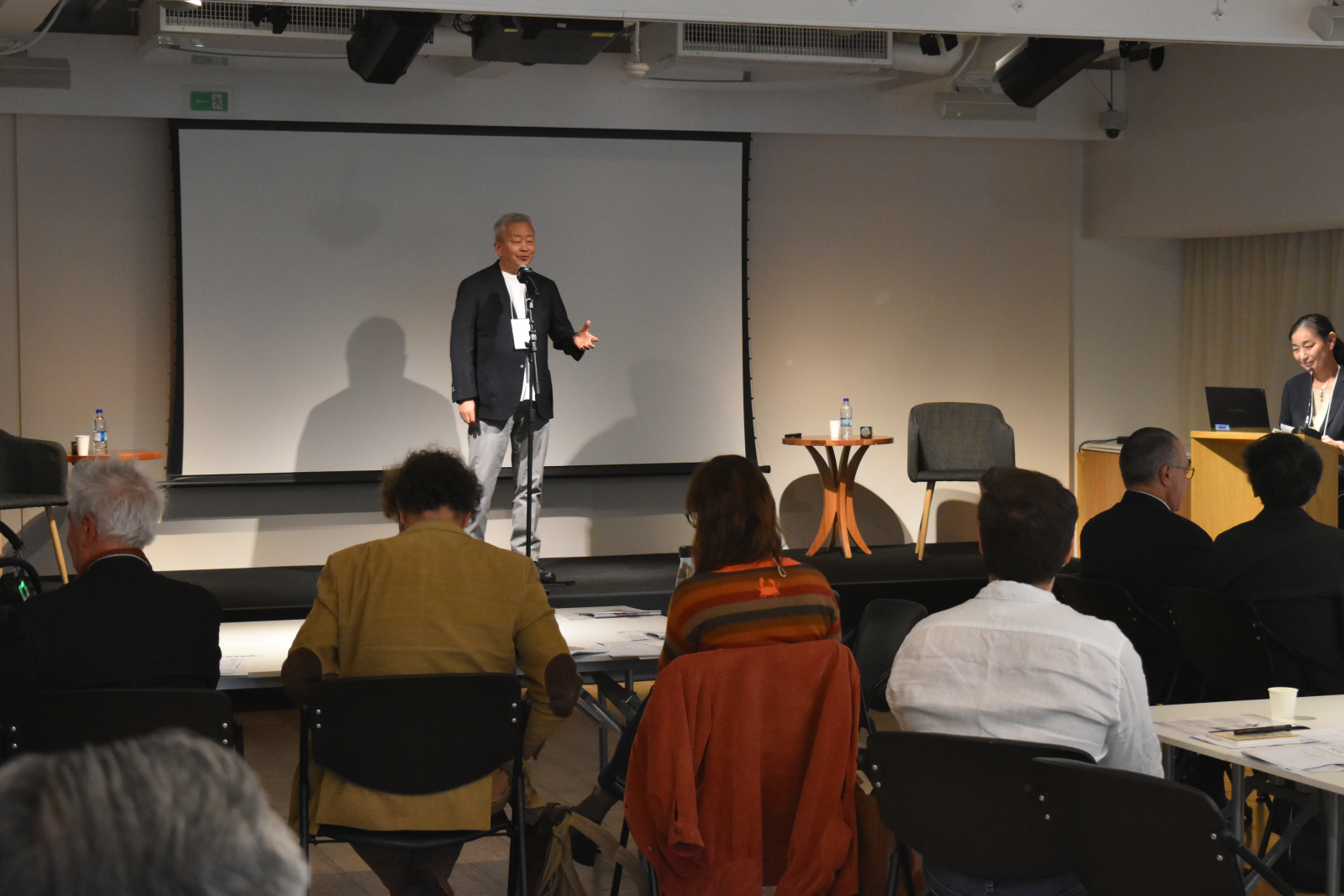
On September 17, the Kyoto Institute of Philosophy (KIP) held the event “KIP Special Sessions in Brazil” at Japan House São Paulo in São Paulo, Brazil. With an eye toward the realization of a “Multilayered Society of Values,” local business leaders, university researchers, and Indigenous thinkers joined Japanese philosophers and business leaders to discuss the future of society, crossing the gaps between their differing backgrounds and perspectives. Following on from an event in Mexico, the sessions provided another forum for dialogue that brought together diverse voices from Latin America.
Details
Opening Remarks and Keynote Lectures
In his opening remarks, Jun Sawada, Executive Chairman of NTT and Co-Chairperson of KIP, explained how the Institute was established as a forum for in-depth dialogue between business and academia, based on the recognition that “a new social infrastructure needs a new philosophy.” He expressed his hopes for dialogue across disciplines, describing the event as an opportunity for everyone involved to strengthen their capabilities, including the philosophers, who he said could benefit from engaging with business leaders. He also emphasized the importance of building a “network of networks” that connects diverse networks of people and organizations, explaining that this was one of his reasons for visiting Brazil. Carlos Augusto Roza, President of Japan House São Paulo, welcomed the sessions as an opportunity to deepen ties between Japan and Brazil.
Yoriko Suzuki, Consul-General of Japan in São Paulo, attended as a guest of honor. She reflected on the history of Japanese immigration to Brazil, which began 118 years ago. Japanese immigrants brought their own customs and values into contact with Brazil's culturally rich society, and both communities underwent transformations over successive generations. She emphasized that the history of Japanese immigration demonstrates that living alongside different values does not mean abandoning what makes us unique. Rather, encounters with differences can open new paths and generate new ideas and ways of building society together.
In his keynote lecture, Professor Yasuo Deguchi of Kyoto University, Co-Chairperson of KIP, introduced the concepts of “existential value,” which is about finding value in the very effort to fulfill one's life journey, and the “WE-turn,” a shift from “I do” to “We do.” Professor Deguchi argued that future technologies and businesses need to incorporate well-being and ethical values. He explained that KIP aims to create new values, including existential values, present them to people outside the field of philosophy, and work together to bring about a better society.
Professor Markus Gabriel of the University of Bonn, KIP's Senior Global Advisor, observed that the postwar assumption that economic and technological progress would automatically resolve questions of value is beginning to break down. He therefore emphasized the need for a “New Enlightenment” in which philosophers collaborate across disciplinary boundaries with business practitioners from companies of all sizes and people representing diverse cultures. He stressed the importance of embracing as much anthropological diversity as possible, which he explained was precisely why they had wanted to come to Brazil.
Keynote Dialogue: Amazonian Food and Ancestral Knowledge
The keynote dialogue, “Brazilian and Latin American Perspectives,” moderated by Professor Gabriel, featured Bel Coelho, one of Brazil's leading chefs, and Daniel Munduruku, an author from the Munduruku Indigenous people of the State of Pará and Director-President of Instituto UKA, an organization dedicated to sharing Indigenous knowledge.
Coelho explores Amazonian food culture and sociobiodiversity through her project “Floresta na boca (Tasting the Forest)”. Arguing that preparing and serving food is a political act, she presented a film she had directed featuring foodstuffs such as wild cacao and cassava from the Amazon, along with people whose livelihoods are closely connected to protecting the forest. She explained that these foodstuffs are not merely resources but also embody the memories of the communities that sustain them.
Munduruku argued that we should place our faith in ancestral intelligence rather than artificial intelligence. He described a conception of time in which the past, preserved in memory, continues to manifest itself in the present, and he emphasized our responsibility across generations to become good ancestors. The perspective of viewing human beings not as separate from nature but as part of it also resonated with Professor Deguchi's concept of “Self-as-WE.”
Two Panel Discussions
Two panel discussions followed. The first, “Philanthropy, Aid, and the Ethics of Social Transformation,” brought together perspectives from philosophy, sociology, and the arts. Natasha Geenen, Cultural Director of Japan House São Paulo, who previously served as International Relations Advisor at the Pinacoteca of the State of São Paulo, discussed how cultural institutions can create public spaces where people from different backgrounds encounter one another. Professor Laymert Garcia dos Santos of the Institute of Philosophy and Human Sciences at the State University of Campinas (UNICAMP), a specialist in the sociology of technology who has long been involved in advocating for the rights of the Yanomami Indigenous people, explored the significance of traditional knowledge as a set of practices for caring for oneself and one's community, drawing on examples including the experiences of Yanomami shamans. Professor Deguchi suggested that relationships based on mutual participation rather than unilateral imposition could be found in shared bodily actions, such as people carrying a portable shrine together during a Japanese festival, and in forms of play in which participants share common rules while remaining free to leave at any time.
The second panel, “Who Shapes the Future? Technology, Institutions, and Public Responsibility,” brought together perspectives from industry, education and civil society, and academia. Ricardo Neves, Chairman of NTT DATA Brazil, discussed both AI's potential to reduce disparities in knowledge and productivity and the risks of using it without understanding how it works. He also introduced examples of younger employees using AI effectively to improve productivity. Jair Ribeiro, a former investment banking co-founder who moved into education and founded Parceiros da Educação (Partners in Education), a nonprofit organization connecting private companies with public schools, stressed the need for regulation to prevent a small number of companies from monopolizing AI technology. At the same time, he suggested that AI could become an equalizing force if people had access to basic education. He also expressed strong concerns about the relationship between children and social media.
Professor Augusto Bruno de Carvalho Dias Leite of the Federal University of the State of Rio de Janeiro (UNIRIO), who has translated works by Shuzo Kuki and Kitaro Nishida, two philosophers closely associated with the Kyoto School, into Portuguese, warned against the homogenization of culture through AI and argued that imperfection is a source of human creativity. During the question-and-answer session, participants also discussed the role of families amid rapid technological change.
Roundtable Discussions
The final roundtable session, held under the theme “Pluralistic Societies, Shared Futures,” was moderated by Professor Gabriel. Professor Diogo César Porto da Silva of the University of São Paulo, a specialist in Japanese and comparative philosophy; Professor Eugênio Bucci of the same university, a former journalist who has written extensively on communication ethics and democracy; and Keisuke Ohno, President of Daiso Japan Brasil, served as facilitators and introduced questions for discussion.
Participants from business, academia, cultural institutions, and other fields then divided into three groups, each gathering around one of the facilitators for dialogue. Crossing professional and disciplinary boundaries, they exchanged views on topics including the human capacity to feel, which AI lacks; the concentration of technological power and its implications for democracy; and how companies might use the time freed up by AI to strengthen human relationships. The groups subsequently shared their discussions with all participants.
In his closing remarks, Professor Gabriel emphasized that KIP's role is to bring philosophy into social practice across disciplinary and cultural boundaries within democratic societies where diverse values coexist. He called for continued collaboration in preparation for the second Kyoto Conference, scheduled for July 2027. Sawada also reflected on the day, describing the discussions across all sessions as highly productive.
By bringing together representatives of Brazilian industry and academia alongside people working in culture and Indigenous knowledge, the sessions provided a concrete example of KIP's efforts to discover new values through dialogue across different fields and perspectives.
Others
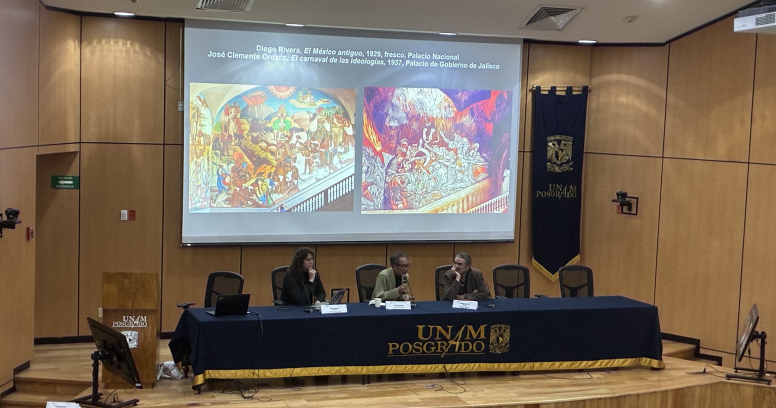
Participants from Different Sectors Discuss WE-turn, Living with AI in Mexico City
2026.11.02
KIP to Co-host Cross-Sector Symposium on Human Intelligence in the AI Era and Japan’s Potential at Waseda University
2026.10.30