Human Value in State-of Art Technologies Discussed with KIP Co-Chairperson
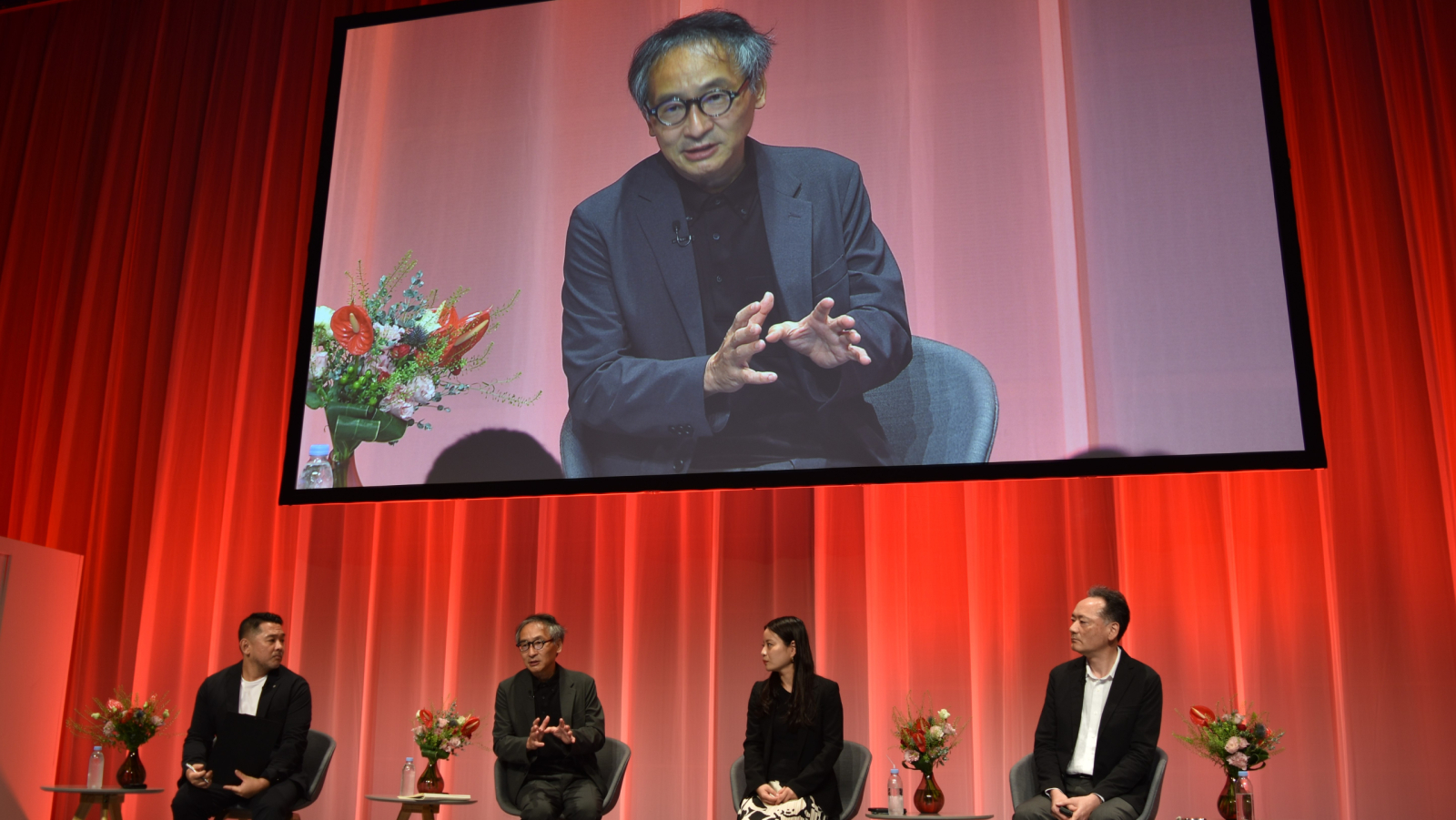
Professor Yasuo Deguchi of Kyoto University, Co-Chairperson of the Kyoto Institute of Philosophy (KIP), participated on September 4 in a dialogue session at Hitachi Social Innovation Forum 2026 JAPAN, held by Hitachi, Ltd. at the Tokyo International Forum. Under the theme “New Perspectives on ‘Value’ Emerging from Advances in Quantum Computing and AI,” the participants discussed what human value means in an era when technologies such as artificial intelligence are becoming increasingly integrated into society.
Details
Joining Professor Deguchi were Miku Hirano, President and CEO of the AI company Cinnamon Co., Ltd., and Hiroyuki Mizuno, Corporate Chief Researcher, R&D Group and Quantum Computing Project Leader at Hitachi. Speaking from the respective perspectives of a philosopher, a business leader, and a researcher, the three exchanged views for approximately one hour on the relationship between cutting-edge technology and human beings.
Against the backdrop of AI surpassing human capabilities in an increasing number of fields, Professor Deguchi observed that human beings have long regarded themselves as the most intelligent beings on Earth. “As entities more intelligent than humans emerge, however, we are being forced to reconsider fundamental values, including the significance of human existence and human dignity,” he said. He described human society as being in an “identity crisis.” Value, he explained, gives direction to our bodily actions, and when that direction becomes unclear, people no longer know what they should do. He suggested that this situation is now occurring at multiple levels, from individuals to entire societies.
Toshiaki Higashihara, Executive Chairman of Hitachi, serves as a Director of KIP. Reflecting on the establishment of KIP through collaboration between industry and academia at a time of such “identity crises,” Professor Deguchi emphasized that the Institute’s mission is not to identify a single correct value, but to broaden the range of possible values, articulate them, and present them to society.
Hirano identified “will” as a key difference between human beings and AI. She argued that AI cannot have desires or intentions of its own. Instead, humans will form intentions, and AI will help realize them. She therefore stressed the importance, not only for individuals, but also for organizations such as companies to develop and clearly articulate their own sense of purpose. As AI continues to evolve, she suggested, people will increasingly be compelled to reconsider their own values and ask themselves how they want to live.
Mizuno observed that new technologies will undoubtedly make possible things that could not previously be done. Whether those capabilities are directed toward socially beneficial forms of value or unintentionally move in another direction, he argued, ultimately depends on the choices people make. As AI and other technologies increasingly take over tasks previously performed by humans, he suggested that the values human beings should possess and cherish may themselves change. Greater freedom made possible by technology, he added, may help clarify what humans are striving for.
Professor Deguchi argued that our engagement with cutting-edge technologies such as AI should not be guided solely by “convenience and efficiency.” Rather, he said, we are increasingly being forced to consider values concerning the kind of life we ultimately want to lead. At the same time, he emphasized that companies developing new technologies need not become pessimistic amid growing concern over the negative consequences of rapid advances in AI. Precisely because values have become difficult to locate, he suggested, the present moment also represents an opportunity. He stressed the importance of putting forward new values in an age of “identity crisis” and embedding those values in products and technologies.
Others