Seminar in Kyoto Seeks to Move Past Either-Or Thinking in the AI Era
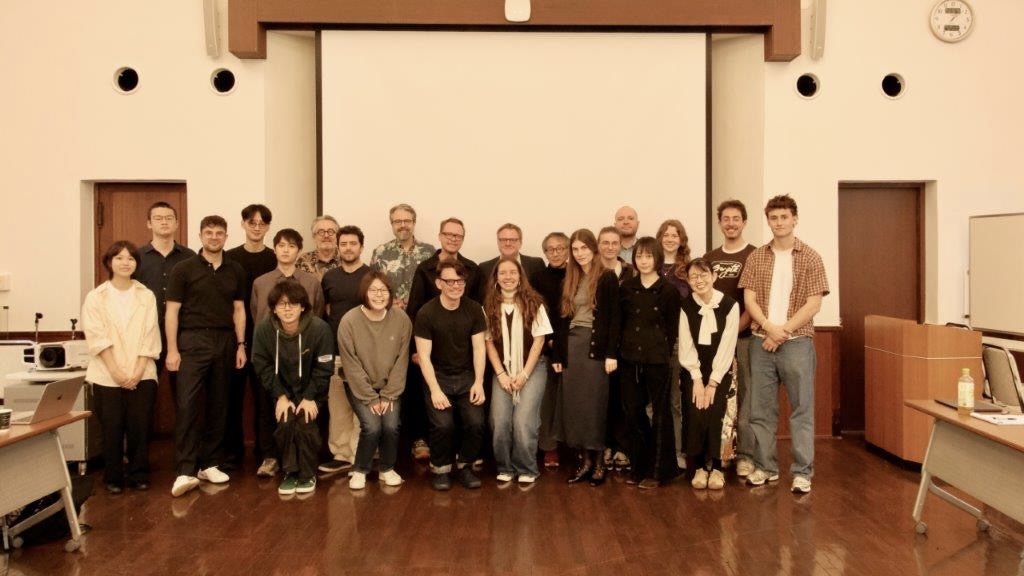
At a five-day gathering in Kyoto in April, participants explored “non-duality” as a philosophical, cultural, and ethical orientation in the age of AI. The intensive program, running from April 20 to 24, was held by the Kyoto Institute of Philosophy (KIP) and the New York–based Institute for Philosophy and the New Humanities (IPNH), and featured lectures, workshops, and discussions.
Details
IPNH is an international philosophical platform established in 2020 as a collaboration between the University of Bonn and The New School for Social Research, with the support of the Udo Keller Foundation. KIP joined IPNH as a co-organizer this year.
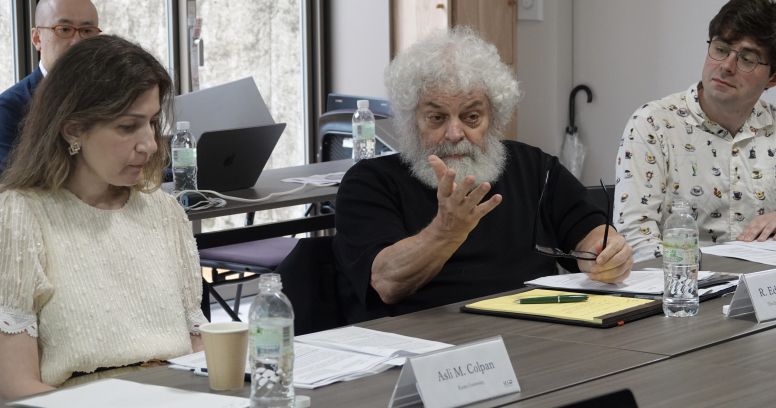
The 2026 seminar is structured as a two-part program in Kyoto and New York, with the Kyoto session serving as Part I. A joint keynote session was led by Dr. Lorenz Schumann, founder of swissQuant Group—a Zurich-based fintech company providing software for financial institutions—and Markus Gabriel, a professor at the University of Bonn and Senior Global Advisor to KIP. Yasuo Deguchi, a professor at Kyoto University and Co-Representative Director of KIP, also delivered a keynote lecture. Fifteen early-career researchers from the University of Bonn, The New School for Social Research, and Kyoto University took part in the discussions.
The theme of the seminar is “Dualism and Non-Duality in the Age of Artificial Intelligence.” Mind and matter, subject and object, human and machine, natural and artificial intelligence, language and code, organic and inorganic, sensibility and understanding—these traditional oppositions have long shaped Western thought. Yet as AI becomes deeply involved in human intellectual activity, they may no longer suffice for understanding our entanglement with intelligent machines. Taking this question as their starting point, participants exchanged views on how such binary oppositions might be critically revised, rearticulated, and at times overcome.
At the heart of the discussion was “non-duality” as a philosophical, cultural, and ethical orientation. What can be learned from Japanese and broader East Asian traditions of thought so that, rather than simply separating humans and AI, their relationship might be grasped more deeply? Kyoto School philosophy and Buddhist epistemologies offer intellectual traditions that view reality as fundamentally interconnected and dynamic rather than as composed of separable entities. Through the joint keynote session by Schumann and Gabriel, the keynote lecture by Deguchi, and lectures and workshops led by the IPNH co-directors, participants approached this question from multiple angles.
In his lecture, Professor Deguchi argued that “the AI of the future should be an ‘existential AI’—one that acts as a fellow, ethically supporting the fulfillment of the life narrative of the whole ‘WE that includes me,’ rather than of isolated individuals.” Drawing on East Asian non-dualistic thought, he offered a perspective that reframes the relationship between humans and AI as one of living together, rather than of opposition.
On the final day, participants visited the National Museum of Modern Art, Kyoto, to view a special exhibition on Takehisa Yumeji. Afterwards, walking through the gardens of Heian Jingu Shrine, they discussed the cultural differences between West and East and the universality that underlies them. In late September, the seminar will move to New York for another five-day program.
Others